Laboratory colloid mill CLM-0.25.1
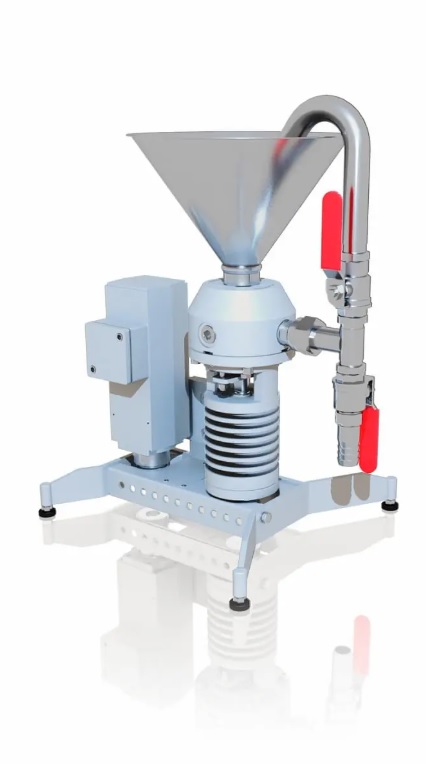
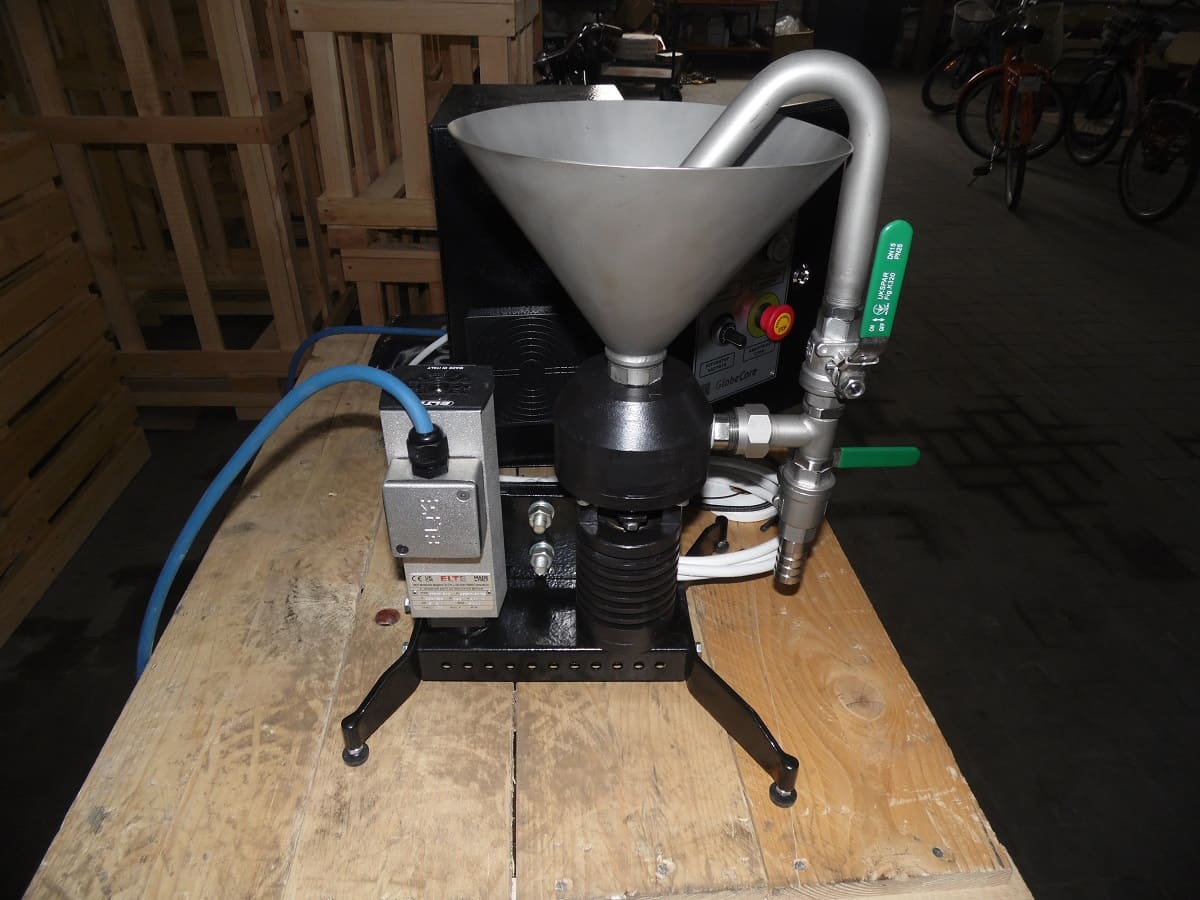
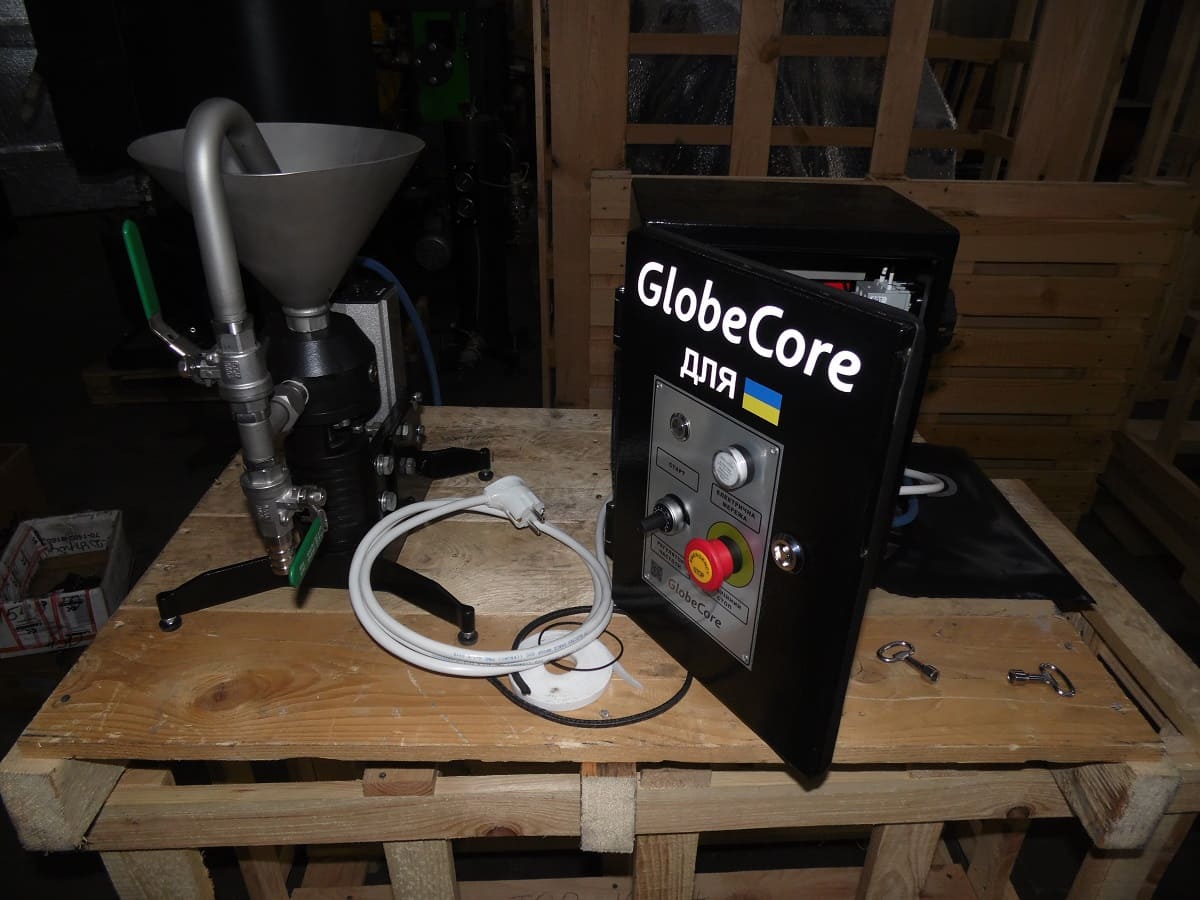
The CLM-0.25.1 laboratory colloid mill is purpose-built for homogenizing and emulsifying liquid materials – producing thick, high-shear-stress slurries – at laboratory scale. It’s the ideal tool for R&D teams developing and refining emulsion formulations before scaling to full production.
What It’s Used For
The CLM-0.25.1 gives laboratories precise control over small-batch emulsion production, making it possible to:
- Prepare laboratory batches of bitumen emulsions for testing and quality evaluation
- Select and refine emulsion formulations based on ingredient composition and intended field of application
The mill can be supplied as a standalone laboratory unit, or integrated as part of a complete bitumen emulsion production line – giving you the flexibility to scale from lab testing to full production with a consistent process.
How It Works
Like all colloid mills in the range, the CLM-0.25.1 relies on a rotor/stator system to achieve fine dispersion and homogenization. As liquid material passes through the precisely engineered gap between the rotating rotor and stationary stator, high shear forces break down and disperse the components – producing a stable, uniform emulsion even at small laboratory volumes.
This makes it possible to replicate, at bench scale, the same emulsification behavior your product will exhibit in full-scale production — so formulation decisions made in the lab translate reliably to the field.
Applications
Bitumen emulsions produced and tested with the CLM-0.25.1 serve a wide range of industries:
Road Construction
- Surfacing emulsions
- Pothole patching
- Bonding of asphalt layers
- Slurry Seal and Multimac technologies
- Ground and base stabilization
- Asphalt recycling emulsions
- Long-term storage emulsions (wintertime pothole patching mixtures)
- Tackiness remover emulsions
Hydraulic Engineering
- Waterproof membranes for foundations, swimming pools, pipe and pile linings
- Applied by jet method – single- or double-component, for accelerated film formation
Roofing
- Waterproof membranes for roofs of varying complexity
- Applied by jet method for fast, even coverage
Why It Delivers Results
- Lab-to-production consistency – formulations tested on the CLM-0.25.1 scale reliably to full production
- Flexible integration – works as a standalone unit or as part of a USB-2 production line
- Broad formulation range – supports development of emulsions for road, hydraulic, and roofing applications
- Fast formulation iteration – quickly test different ingredient ratios and processing conditions before committing to large-scale production
| No. | Parameter | Value |
| 1 | Capacity, L/h (gal/min), at least |
25 (0.11)* |
| 2 | Fill funnel volume, L (gal) |
1.5 (0.4) |
| 3 | Operating temperature, °C (°F), max |
150 (302) |
| 4 | Knife axial gap, mm (in) |
0.25… 1.25 (9.8∙10-3… 4.9∙10-2) |
| 5 | Knife radial gap, mm (in) |
0.25 (9.8∙10-3) |
| 6 | Knife tip speed, m/s (in/s) |
50–57 (1,968.5–2,244)** |
| 7 | Rotation speed of mill shaft and electric drive, rpm |
16,750–19,250** |
| 8 | Rated power of electric drive, kW |
0.7 |
| 9 | Power circuit voltage at 50 Hz (three-phase type), V |
400*** |
| 10 | Overall dimensions in operating position, mm (in), max | |
| — length |
340/425 (13.4/16.7) |
|
| — width |
290 (11.4) |
|
| — height |
450 (17.7) |
|
| 11 | Weight, kg (lbs), max |
15 (33) |
* Depending on the product viscosity
** Depending on the frequency converter installation
*** Upon customer’s request
- Capacity adjustment
- Corrosion resistance
- Compact design
- Selection of optimal ratio for asphalt emulsion components (formulations)
- Preparation of bitumen emulsion samples for further testing
- Any type of materials for asphalt emulsion can be tested in this mill, because the mill can be equipped with various rotor/stator tooling, depending on the material and the required production process.