Colloid mill CLM-2/4
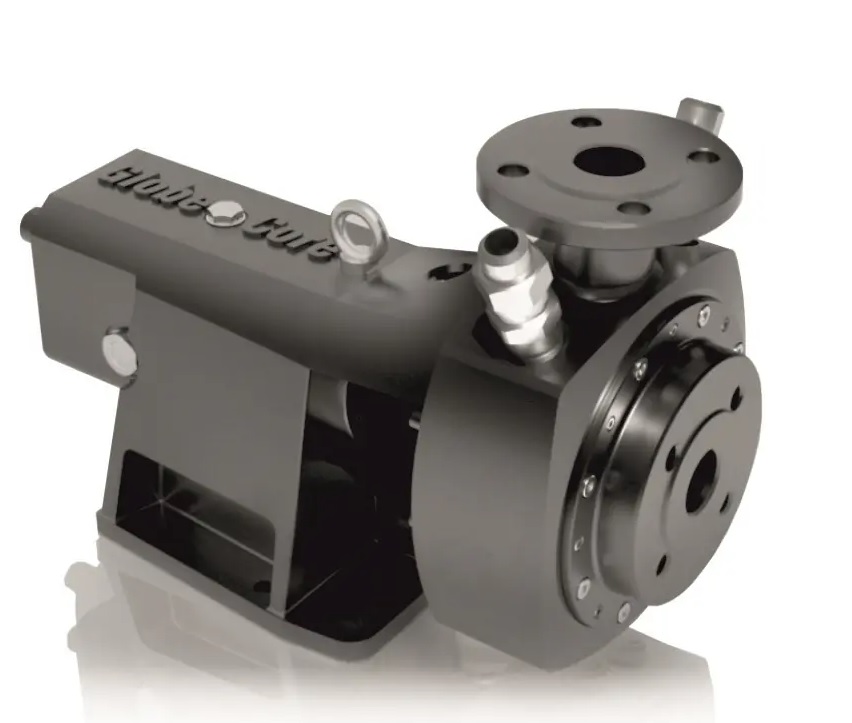
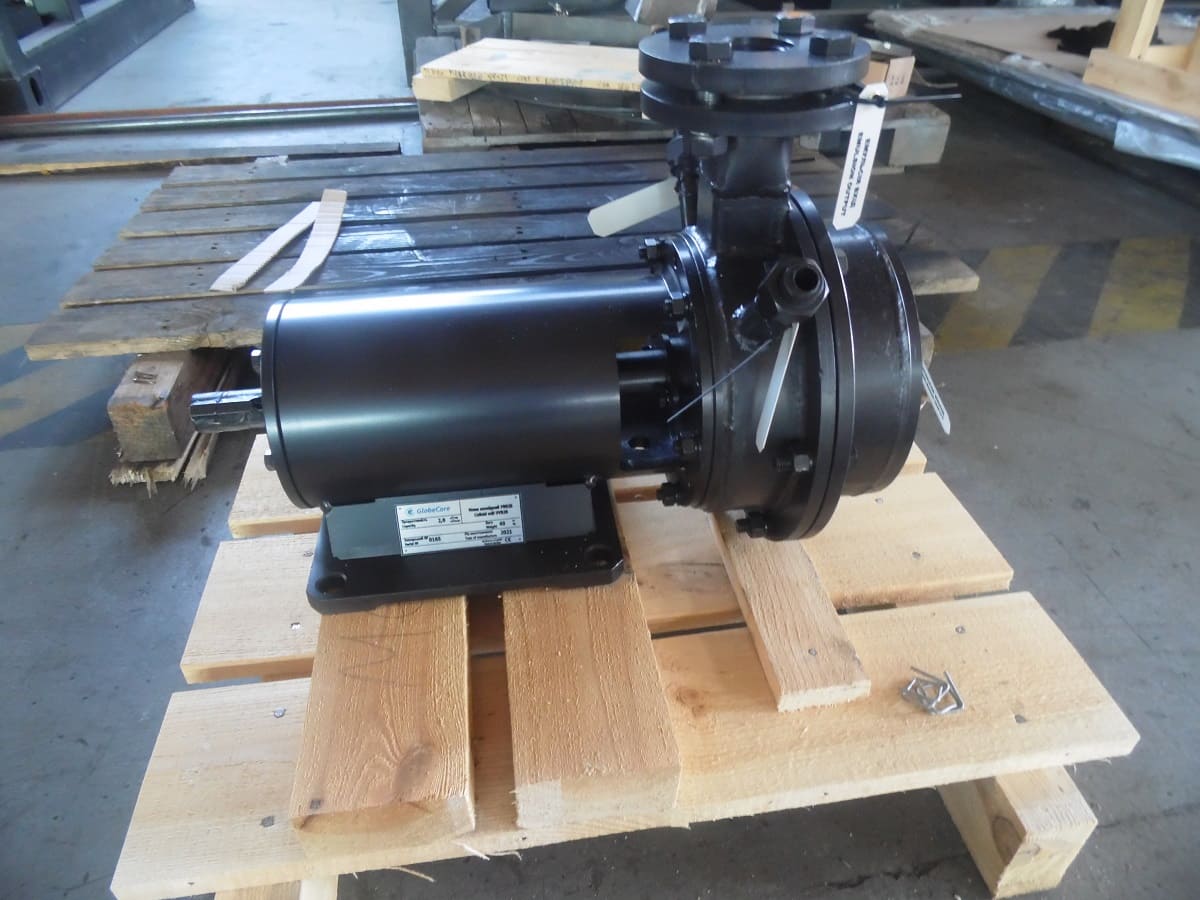
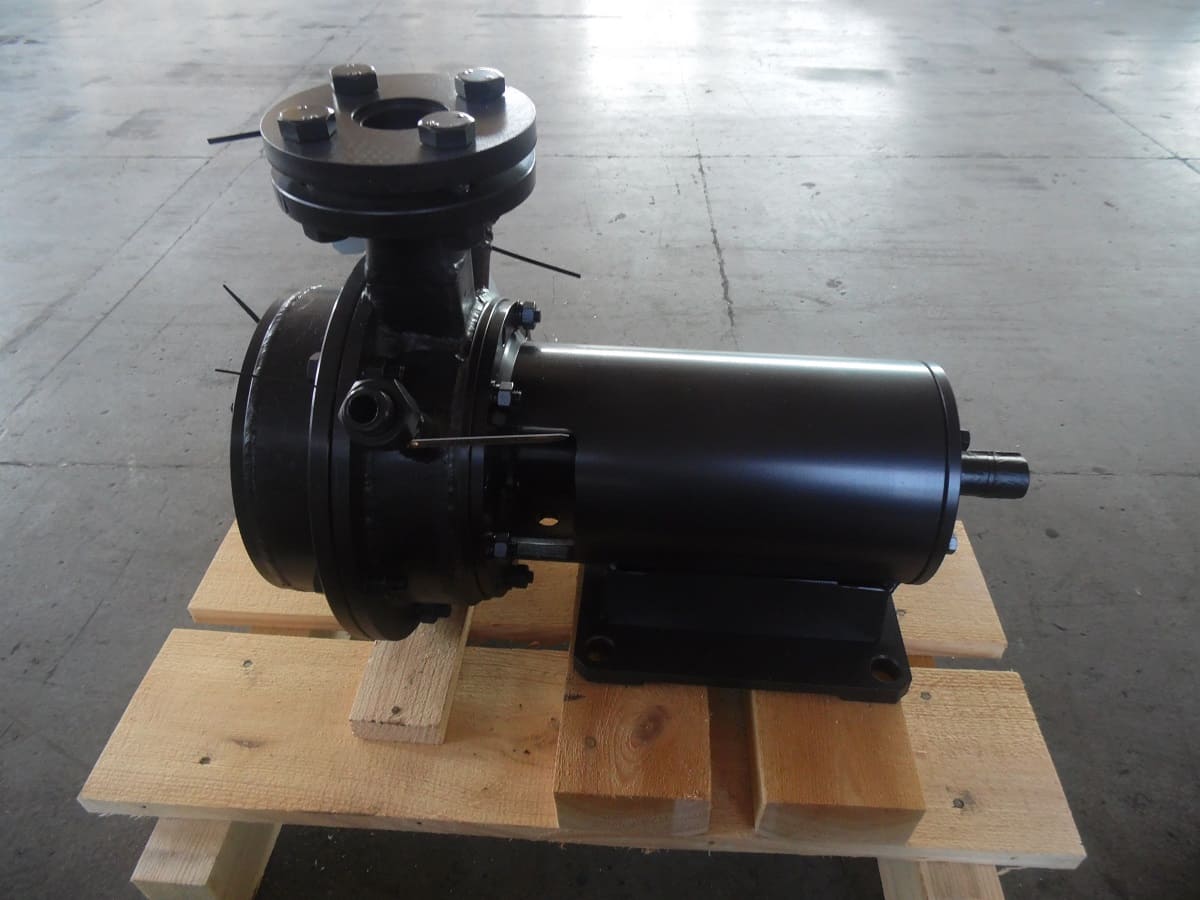
The CLM-2/4 colloid mill is engineered for inline homogenization and emulsification of liquid products – producing thick, high-shear-stress slurries with consistent quality at production volume. It’s particularly well-suited for bitumen emulsion preparation, while also handling a broad range of other industrial mixing, dissolution, and processing applications.
What It’s Used For
The CLM-2/4 is built for continuous, inline processing, making it a strong fit for:
- Bitumen emulsion production at industrial scale
- Preparation, dissolution, and processing of liquid products across various industries
Its inline design integrates smoothly into existing production lines, allowing continuous processing without batch-to-batch interruptions.
How It Works
The CLM-2/4 uses a rotor/stator system: a rotor (moving tool) and stator (stationary tool) made up of concentric rings fitted with cutters and knives, precision-engineered with grooves and holes for optimal mechanical action on the product.
During operation, the rotor and stator rings align coaxially and rotate contact-free at speeds up to 45 m/s, maintained by precise technological axial and radial gaps – ensuring reliable performance without wear from direct contact.
The process:
- Product enters the operating chamber through the stator’s axial bore (inlet)
- It passes through the rotor/stator system, where intense hydrodynamic forces take hold
- Processed product exits radially through the outlet
As the product moves through the rotor/stator gap, it undergoes rapid shifts in shear stress, shear force, and flow velocity. This increases the contact surface area between chemical agents, accelerating reactions and driving intensive dispersion, emulsification, homogenization, grinding, and pulverization – all in a single continuous pass.
Applications
Bitumen emulsions produced with the CLM-2/4 serve a wide range of industries:
Road Construction
- Surfacing emulsions
- Pothole patching
- Bonding of asphalt layers
- Slurry Seal and Multimac technologies
- Ground and base stabilization
- Asphalt recycling emulsions
- Long-term storage emulsions (wintertime pothole patching mixtures)
- Tackiness remover emulsions
Hydraulic Engineering
- Waterproof membranes for foundations, swimming pools, pipe and pile linings
- Applied by jet method — single- or double-component, for accelerated film formation
Roofing
- Waterproof membranes for roofs of varying complexity
- Applied by jet method for fast, even coverage
Why It Delivers Results
- Continuous inline processing — no batch interruptions, consistent output at production scale
- High relative rotor speed (up to 45 m/s) – drives intensive dispersion and homogenization
- Contact-free rotor/stator design — reliable long-term operation with minimal wear
- Versatile beyond bitumen – suitable for preparation, dissolution, and processing across multiple industries
| No. |
Parameter |
Value |
| 1 |
Capacity of the unit, m3/h (gal/min) |
2…4 (8.8… 17.6)* |
| 3 |
Operating temperature, °С (°F), max |
150 (302) |
| 4 |
Maximum pressure, bar (psi) |
10 (145) |
| 5 |
Operating volume of product, L |
flow |
| 6 |
Shaft seal type |
packing |
| 7 |
Rotor/stator tooling type |
nozzle |
| 8 |
Replaceable knife kit |
optional |
| 9 |
Knife axial gap (preset), mm |
0.5…1.5 (2·10-2…6·10-2 ) |
| 10 |
Knife radial gap, mm (in) |
0.25 (10-3) |
| 11 |
Knife tip speed, m/s (m/h), max |
45 (100) |
| 12 |
Mill shaft and bearing rotation speed, rpm |
6,350 |
| 13 |
Electric motor shaft rotation speed, rpm |
2,900 |
| 14 |
Drive power, kW |
11 |
| 15 |
Power voltage, V |
customizable |
| 16 |
Dimensions, mm (in), max: |
|
|
900 (35.4) |
|
|
580 (22.8) |
|
|
450 (17.7) |
|
| 17 |
Weight, kg (lbs), max |
190 (420) |
*Depending on the product (liquid)
- The mill can be used in various industries.
- The mill can be equipped with rotor/stator tooling of different types: nozzle, chamber, conical (for grinding applications and viscous products).
- Depending on the required intensity of mechanical and thermal processing, not only the rotor/stator tooling type, but also the number of operating stages (rings) can be selected. The tools can be either collapsible or manufactured from a solid workpiece, and made from various grades of steel depending on the intended application. The optimal tool geometry for a specific task, as well as the tool material, can be selected accordingly.
- The mill can be operated both indoors and in sheltered outdoor environments.