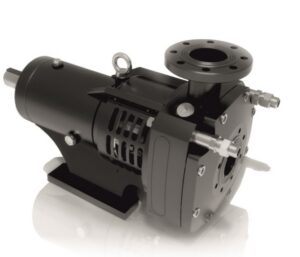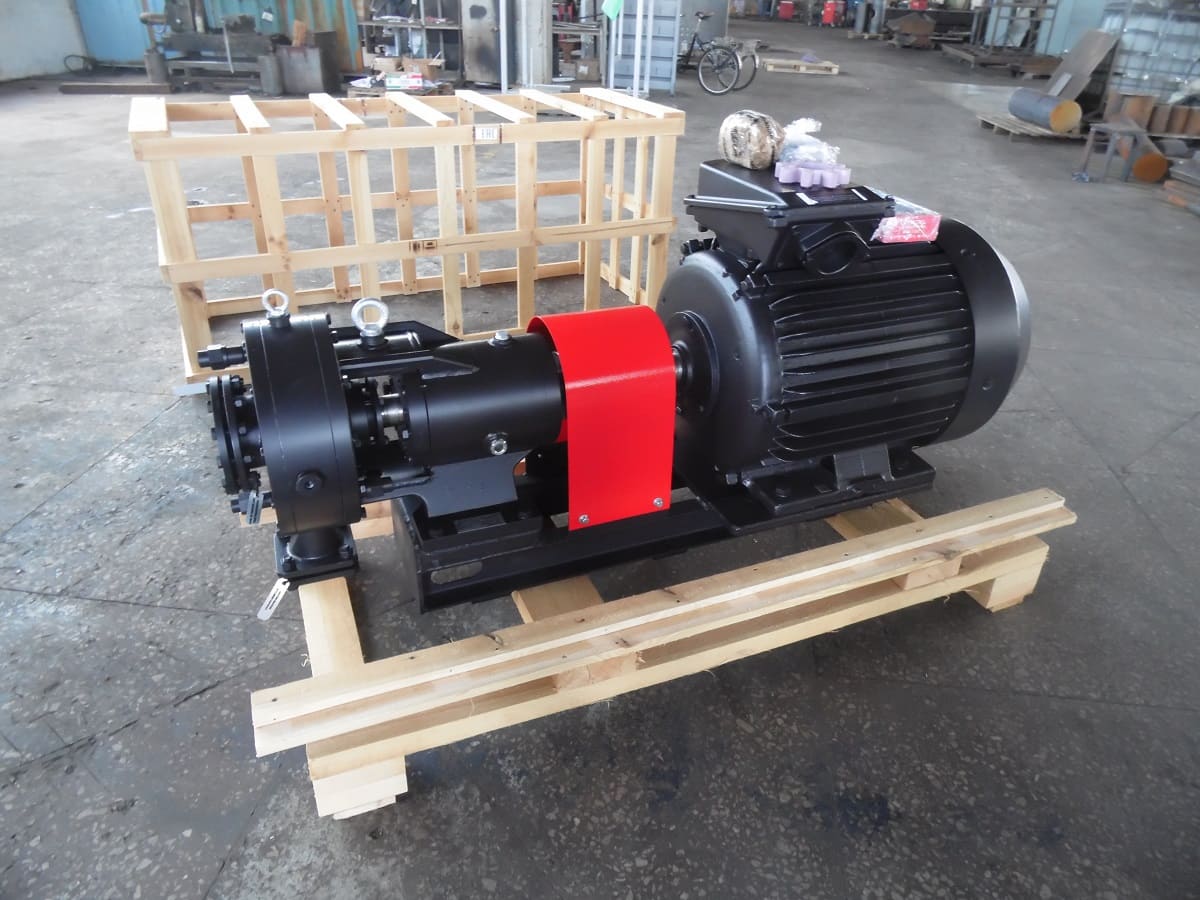
A colloidal mill machine is a wet-processing device for treating prepared, flowable liquids, emulsions, suspensions, slurries, and pastes. In road-material production, its main duties are high-shear dispersion, emulsification, wet particle-size reduction, and homogenization. It is not a dry grinder, a general-purpose tank mixer, or a complete bitumen-emulsion or bitumen-modification plant.
For bitumen emulsion, the mill disperses bitumen in a prepared aqueous phase. For polymer-modified bitumen, it can reduce and disperse a suitable modifier in flowable binder. These are different processes, so the mill and the surrounding line must be selected for the actual formulation rather than for the word “mill.”
What process should a colloidal mill machine perform?
Equipment selection starts by identifying the physical operation. Dry grinding, bulk mixing, dispersion, emulsification, and homogenization are not interchangeable duties.
| Required operation | Process objective | Role of a colloid mill |
|---|---|---|
| Dry grinding | Produce powder or granules from dry solids | Not the normal duty; use equipment designed for dry size reduction and powder handling. |
| Bulk mixing | Blend ingredients and circulate material throughout a vessel | Does not replace a tank mixer or agitator. |
| Wet particle-size reduction | Reduce suitable particles or agglomerates in a liquid binder | A principal duty when the feed is prepared and flowable. |
| Dispersion | Distribute suspended material through a continuous phase | A principal duty of the rotor–stator working zone. |
| Emulsification | Disperse one immiscible liquid phase in another | A principal duty in bitumen-emulsion production. |
| Homogenization | Improve uniformity in the processed stream | Performed on material passing through the mill. |
A formulation may require several operations in sequence. For example, a polymer-modified binder may need controlled modifier feeding and premixing before wet particle reduction, dispersion, and homogenization. A bitumen emulsion requires separate preparation and metering of the bitumen and aqueous phases before emulsification.
How rotor-stator wet processing works
A colloid mill contains a rotating rotor and a stationary stator. Prepared material enters the working chamber and passes through the restricted clearance between them. Relative movement creates intensive shear, turbulence, and changing flow conditions. Depending on the formulation, this treatment can reduce suitable particles or agglomerates, disperse a phase, form an emulsion, and improve uniformity.
The mill processes only the stream that passes through its working zone. A tank agitator performs a different task: it circulates the bulk contents of a vessel, supports ingredient addition, and maintains a consistent feed. Many road-material lines therefore require both a mixer and a colloid mill.
The working gap is an operating variable, not a universal quality setting. A smaller gap should not automatically be considered better. Gap selection must be evaluated with feed condition, particle size, solids content, viscosity, temperature, feed rate, equipment load, and the required material properties.
Bitumen emulsion and bitumen modification are different duties
| Application | Material system | Primary mill duty | Separate plant functions |
|---|---|---|---|
| Bitumen emulsion | Prepared bitumen and water-based phases | Dispersion, emulsification, and homogenization | Phase preparation, temperature conditioning, metering, pumping, controls, storage, and finished-emulsion handling |
| Polymer-modified bitumen | Flowable bitumen with a suitable modifier | Wet modifier reduction, dispersion, and homogenization | Bitumen conditioning, modifier feeding, premixing, circulation or holding, thermal management, sampling, and storage |
A mill selected for one process should not automatically be assigned to the other. The surrounding equipment, feed conditions, and acceptance tests are different. GlobeCore presents the wider process context separately in its bitumen-emulsion production range and bitumen-modification range.
What the mill does in bitumen-emulsion production
The bitumen and aqueous phases are prepared outside the mill and delivered under controlled conditions. The rotor–stator stage disperses bitumen in the aqueous medium and homogenizes the processed stream. The standalone mill does not dissolve aqueous-phase ingredients, condition the bitumen, establish the phase ratio, or store the finished emulsion.
What the mill does in bitumen modification
In a suitable modification process, the mill treats a flowable bitumen-and-modifier formulation. GlobeCore documents its CLM modification mills for inline homogenization and emulsification of liquid products and thick slurries under high shear. The documented modification range covers feed with an initial polymer particle size up to 5 mm. This does not confirm suitability for every polymer grade, concentration, binder, or addition method.
Where supported CLM models fit
The CLM family includes laboratory and production-scale models for different road-material duties. A model should be considered only after the process and formulation have been defined.
| CLM model | Documented duty | Documented capacity |
|---|---|---|
| CLM-0.25.1 | Laboratory homogenization and emulsification of liquids and thick slurries; preparation and comparison of bitumen-emulsion formulations | Minimum 25 L/h |
| CLM-2/4 | Inline homogenization and emulsification, with a focus on bitumen-emulsion production | 2–4 m³/h |
| CLM-16/25 | Inline processing for bitumen-emulsion production | 16–25 m³/h |
| CLM-8/16 | Inline high-shear processing, including grinding granulated SBS during modified-bitumen production | 8–16 m³/h |
| CLM-10/20 | Inline homogenization and emulsification for polymer-based bitumen modification | 10–20 m³/h |
These values are documented model capacities, not guaranteed output for an untested formulation. A nominal water-based capacity or a result obtained with another material must not be transferred directly to a different binder, emulsion recipe, polymer loading, or viscosity.
Actual results depend on the material, recipe, initial particle size, solids content, viscosity, temperature, feed rate, working gap, and number of processing cycles. Testing with the customer’s actual formulation is recommended whenever the required throughput or finished-material result is not confirmed by documented data.
Feed preparation determines stable operation
Flowability and controlled delivery
The feed must reach the working zone continuously and at a controlled rate. Viscosity affects pumping, pipe losses, feed stability, practical throughput, and the treatment received in the mill. Viscosity data should always be reported with the corresponding temperature.
A colloid mill cannot correct a feed system that bridges, separates, pulses, or stops flowing. Depending on the process, stable operation may require storage tanks, temperature conditioning, premixing, controlled pumps, metering devices, valves, and suitable piping before the mill.
Initial size and solids condition
Initial particle size, shape, hardness, and concentration affect feeding and milling. Oversized or uncontrolled material may require separate crushing, screening, or prebreaking. Foreign objects should be removed upstream. The mill should not be used as a substitute for feed inspection or contamination control.
Temperature management
Temperature influences viscosity, flowability, line pressure loss, and practical throughput. Inlet and outlet temperatures should be recorded during trials. The mill is not the complete heating or cooling system; tanks, pipelines, pumps, instrumentation, and thermal utilities must maintain the process conditions required by the formulation.
Gap settings, feed rate, and number of passes
The interaction of operating variables matters more than any single setting. Reducing the gap may change treatment intensity, flow, load, and product temperature. Increasing feed rate changes the material’s processing conditions. Additional passes or recirculation cycles increase processing history and production time and may also affect temperature.
One pass may be sufficient for one formulation, while another may require recirculation. The correct approach is to define acceptance criteria, run controlled trials, and record:
- complete formulation and ingredient-addition sequence;
- initial feed condition, particle size, and solids content;
- viscosity at the stated temperature;
- inlet and outlet temperatures;
- feed rate and observed flow stability;
- working-gap setting;
- number of passes or recirculation cycles;
- sample identity and downstream material-test results.
What requires separate upstream and downstream equipment?
A standalone colloid mill is one processing stage. A practical road-material installation may require the following separate functions:
- raw-material receiving and storage;
- bitumen temperature conditioning;
- aqueous-phase preparation for emulsion production;
- polymer or additive storage and controlled dosing;
- bulk premixing and vessel circulation;
- feed pumping, metering, valves, and instrumentation;
- recipe-specific circulation, holding, or maturation;
- finished-product tanks, sampling, and quality-control testing;
- transfer, loading, or packaging equipment where required;
- flushing or cleaning systems and residue handling.
This scope distinction is essential when comparing a mill purchase with a complete production line. The colloid mill may be the central high-shear stage, but it does not provide every preparation, control, thermal, or handling function.
Colloid mill compared with related equipment
| Equipment | Primary role | Selection distinction |
|---|---|---|
| Colloid mill | Wet size reduction, dispersion, emulsification, and homogenization | Uses a restricted rotor-stator working zone and requires prepared, flowable feed. |
| Tank mixer | Bulk blending and circulation | Maintains vessel uniformity but does not automatically provide the same localized milling action. |
| Dry grinder | Dry-solids particle reduction | Used for powders or granules rather than wet bitumen processing. |
| High-shear mixer | Intensive mixing and dispersion | Its geometry and demonstrated process result must be compared with the required mill duty. |
| Disperser | Wetting and distributing solids in a liquid | Does not necessarily provide the same restricted rotor–stator passage. |
| Homogenizer | Improving product uniformity | A broad equipment class; the mechanism and verified result must be specified. |
| Ball mill | Media-based particle-size reduction | Uses grinding media and a different residence-time mechanism. |
| Complete production line | Integrated preparation, processing, control, and handling | Includes many functions beyond the standalone mill. |
Practical equipment-selection checklist
- Define the product. State whether the target is a bitumen emulsion, polymer-modified bitumen, suspension, slurry, or another wet formulation.
- Identify the required operation. Separate dry grinding, bulk mixing, wet reduction, dispersion, emulsification, and homogenization.
- Provide the complete formulation. Include all materials, proportions, solids content, and order of addition.
- Describe the feed. Report initial particle size, temperature, flowability, viscosity at that temperature, and upstream preparation.
- Define throughput correctly. Distinguish mill flow from sustained line production after startup, recirculation, changeovers, and cleaning.
- Set acceptance criteria. Specify target particle or droplet size where applicable, dispersion quality, stability, texture, or relevant downstream material tests.
- Plan process trials. Compare feed rate, working gap, number of cycles, and temperature behavior under controlled conditions.
- Review line hydraulics. Evaluate vessels, pumps, piping, valves, metering stability, and downstream resistance as one system.
- Define cleaning or flushing. Specify media, sequence, residue handling, inspection access, frequency, and allowable downtime.
- Confirm utilities and connections. Document electrical supply, thermal services, controls, installation space, access, and inlet and outlet requirements.
Frequently asked questions
Can a colloidal mill machine grind dry mineral powder?
It should not be selected for that duty solely because it is called a mill. The CLM duties discussed here involve wet processing of flowable liquids, slurries, emulsions, and binders. Dry powder production requires equipment designed for dry size reduction and powder handling.
Can a colloid mill replace a tank mixer?
No. A mixer provides bulk blending and vessel circulation. A colloid mill applies concentrated treatment to the stream passing through its rotor–stator zone. Many installations need a mixer upstream and a mill as a separate stage.
Is the smallest working gap always best?
No. Gap selection must be evaluated with feed size, viscosity, temperature, feed rate, equipment instructions, and the required result. The narrowest setting is not automatically the most productive or appropriate setting.
Is one pass enough?
There is no universal answer. The required number of passes depends on the formulation and acceptance criteria. Controlled testing should establish whether one inline pass or a recirculation arrangement is required.
Is a CLM mill a complete bitumen-emulsion plant?
No. It is the high-shear emulsification and homogenization stage. A complete plant also requires phase preparation, metering, thermal conditioning, pumping, controls, storage, and downstream handling.
Can a capacity value be treated as guaranteed production output?
No. Published capacity is a model specification for the documented duty. Actual output for another formulation depends on its composition and operating conditions and should be confirmed by representative testing.
Discuss the real formulation before selecting a CLM mill
For a practical engineering review, provide GlobeCore with the formulation, feed condition, required throughput, target texture or particle size, viscosity, temperature limits, cleaning method, available utilities, and line-connection requirements. When documented data do not confirm the required result, request testing with the actual formulation before selecting the mill or finalizing the production-line design.