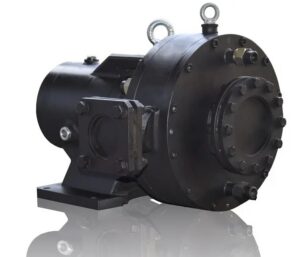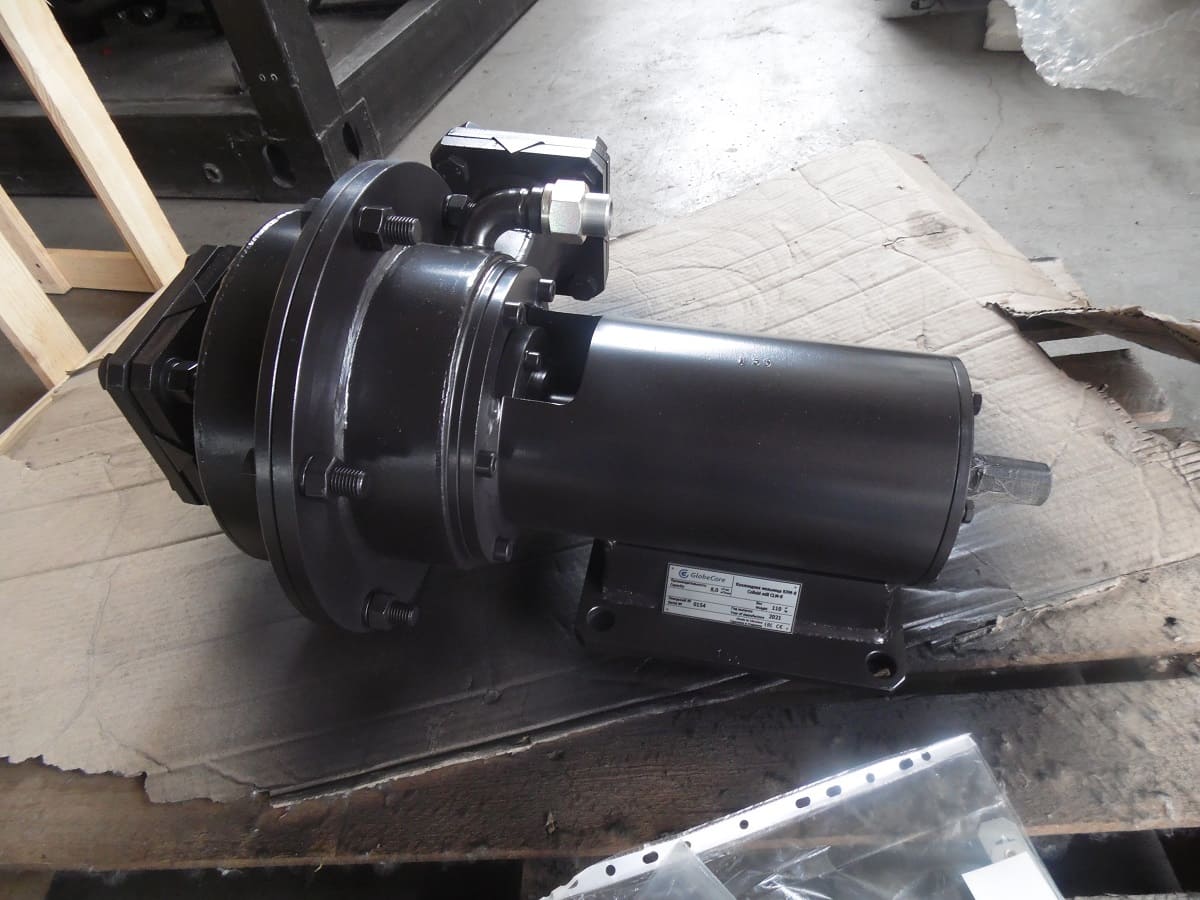
Colloid milling is a wet-processing operation for a prepared, flowable material. In road-material production, it can provide particle-size reduction, dispersion, emulsification, and homogenization in a rotor–stator working zone. It is not dry grinding, bulk tank mixing, or a complete bitumen-processing plant.
For bitumen emulsion, the mill disperses a prepared bitumen phase in a prepared aqueous phase. For polymer-modified bitumen, it may reduce and disperse a suitable modifier in liquid binder. These are different processes, even though both can use a colloid mill.
What process does colloid milling perform?
Equipment selection should begin with the required transformation, not with the words “mill” or “grinder.” The feed must be wet, controlled, and sufficiently flowable to pass through the working zone.
| Required operation | Purpose | Colloid mill role |
|---|---|---|
| Dry grinding | Produce powder or granules from dry solids | Not the normal duty; use dedicated dry-size-reduction equipment |
| Bulk mixing | Blend ingredients and circulate a vessel | Does not replace a tank mixer or agitator |
| Wet particle-size reduction | Reduce suitable particles or agglomerates in a liquid phase | A principal colloid-milling duty |
| Dispersion | Distribute suspended material through a continuous phase | A principal duty when the formulation and feed are suitable |
| Emulsification | Disperse one immiscible liquid phase in another | A principal duty in bitumen-emulsion production |
| Homogenization | Improve uniformity in the processed stream | Occurs as material passes through the rotor–stator zone |
Several operations may occur during one passage, but they should not be treated as automatic outcomes. The result must be confirmed against the actual formulation and the project’s acceptance criteria.
How the rotor-stator working zone operates
A colloid mill contains a rotating rotor and a stationary stator. Prepared material enters the working chamber and passes through the restricted clearance between them. Relative movement, shear, turbulence, and changing flow conditions apply concentrated mechanical treatment to the stream.
This is different from vessel mixing. An agitator circulates the bulk contents of a tank, while a colloid mill treats only the material that passes through its working zone. A road-material line often needs both: upstream mixing to prepare a consistent feed and inline colloid milling to provide intensive treatment.
The working gap is one process variable, not a universal quality setting. The narrowest gap is not automatically the correct choice. Gap selection must be considered together with initial particle size, solids content, viscosity, temperature, feed rate, equipment load, and the required product result.
Colloid milling in road-construction material production
Bitumen emulsion
Bitumen-emulsion production is a wet emulsification process. The bitumen and aqueous phases are prepared separately, conditioned as required by the formulation, and delivered under controlled conditions to the mill. In the working zone, the mill disperses bitumen in the aqueous medium and homogenizes the processed stream.
The mill alone is not a bitumen-emulsion plant. Separate systems are required for phase preparation, ingredient dosing, bulk mixing, temperature conditioning, pumping, flow control, finished-emulsion handling, storage, and quality-control sampling. The broader process context is shown in GlobeCore’s bitumen-emulsion production equipment section.
Polymer-modified bitumen
Bitumen modification treats liquid binder and a suitable modifier rather than dispersing bitumen in water. The colloid mill can provide wet reduction of modifier particles or agglomerates, dispersion, and homogenization where the application has been confirmed.
Modifier storage and feeding, binder conditioning, premixing, circulation, recipe-specific holding, thermal management, and finished-product storage remain separate line functions. Projects for this duty should be reviewed in the context of bitumen-modification equipment.
| Application | Material system | Main mill duty | Separate plant functions |
|---|---|---|---|
| Bitumen emulsion | Prepared bitumen and aqueous phases | Dispersion, emulsification, and homogenization | Phase preparation, metering, thermal conditioning, pumping, controls, storage |
| Polymer-modified bitumen | Flowable bitumen with a suitable modifier | Wet size reduction, dispersion, and homogenization | Binder conditioning, modifier feeding, premixing, circulation or holding, storage |
A mill or process arrangement selected for one application should not automatically be assigned to the other. The formulations, process objectives, feed conditions, and surrounding equipment are different.
Feed preparation for stable operation
Establish a controlled, flowable feed
The material must reach the mill at a stable rate. A colloid mill cannot correct bridging, phase separation, settling, pulsating delivery, or loss of flow in the upstream system. Depending on the recipe, stable feeding may require a premix vessel, agitator, controlled pump, suitable piping, or other conditioning equipment.
Control initial particle condition
Oversized or uncontrolled pieces may require a crusher, prebreaker, screen, or another preparation stage. Foreign material should be removed before the feed enters the rotor–stator zone. The acceptable incoming particle condition must be confirmed for the proposed equipment rather than inferred from the application name.
Report viscosity with temperature
Viscosity affects pumping, line pressure loss, feed stability, practical throughput, and treatment in the working zone. Temperature can change viscosity and flow behavior, so viscosity should be reported at the relevant process temperature. Inlet and discharge temperatures should also be recorded during trials.
The mill should not be treated as the complete heating or cooling system. Tanks, lines, pumps, instrumentation, and thermal utilities must support the required conditions throughout the process.
Gap, feed rate, throughput, and number of passes
These variables interact. Changing the gap can alter processing intensity, flow, equipment load, and product temperature. Changing the feed rate changes the treatment history of the material. Additional passes or recirculation increase processing time and may also affect temperature.
A published capacity for a model, water, or another reference product must not be treated as guaranteed output for a different formulation. Sustained line production must also account for startup, recirculation, changeovers, flushing, and cleaning.
Actual results depend on the material, recipe, initial particle size, solids content, viscosity, temperature, feed rate, working gap, and number of processing cycles. When documented data do not confirm the required particle size, dispersion, emulsion quality, stability, or throughput, testing with the customer’s actual formulation is recommended.
What a colloid mill does not replace
- Dry grinder: used to reduce dry solids into powder or granules.
- Tank mixer: provides bulk blending and circulation throughout a vessel.
- High-shear mixer: performs intensive mixing or dispersion, but its geometry and validated result must be compared with the required milling duty.
- Disperser: commonly supports wetting and distribution of solids in liquid but does not necessarily provide the same restricted rotor–stator passage.
- Homogenizer: a broad equipment category whose operating principle and demonstrated result must be checked.
- Ball mill: uses grinding media and a different particle-reduction mechanism.
- Complete production line: includes preparation, dosing, heating, pumping, controls, storage, handling, and other functions beyond the mill.
For other wet-processing duties, GlobeCore’s colloid mills for different applications provide a useful reference point. Application relevance does not replace formulation-specific selection.
Cleaning and line integration
Cleaning or flushing requirements should be defined before equipment selection. The procedure must include the rotor–stator zone, connected piping, valves, seals, transfer equipment, and any recirculation loop. Specify the cleaning medium, sequence, frequency, access needs, inspection method, residue handling, and allowable downtime.
Line hydraulics should be evaluated as a system. Review tank levels, pumps, piping, valves, feed control, downstream resistance, sampling points, and the recirculation route. Confirm the available electrical supply and any heating, cooling, ventilation, control, or other process utilities required by the complete installation.
Practical colloid milling selection checklist
- Define the finished material: dry powder, suspension, emulsion, slurry, paste, or modified binder.
- Identify the unit operation: dry grinding, mixing, wet size reduction, dispersion, emulsification, homogenization, or a combination.
- Provide the formulation: all components, proportions, solids content, and order of addition.
- Describe the feed: initial particle condition, flowability, temperature, viscosity at that temperature, and contamination controls.
- State the required throughput: include continuous flow or batch turnaround and whether recirculation is acceptable.
- Set measurable acceptance criteria: particle or droplet-size criterion, dispersion quality, stability, texture, or applicable downstream material tests.
- Define process limits: allowable temperatures, viscosity range, and any formulation-sensitive restrictions.
- Plan trials: record feed rate, working-gap setting, number of passes, inlet and outlet temperatures, and sample results.
- Specify cleaning: method, media, sequence, inspection, residue handling, and downtime.
- Confirm integration: utilities, controls, pumps, vessels, piping, valves, connections, sampling points, space, and service access.
Frequently asked questions
Is colloid milling a dry-grinding process?
No. The process discussed here is wet treatment of a liquid, slurry, emulsion, or flowable paste. Dry powder production requires equipment designed for dry size reduction.
Can a colloid mill replace a tank mixer?
No. A mixer establishes bulk circulation and prepares a reasonably uniform feed. A colloid mill applies concentrated treatment to the stream passing through its rotor–stator zone. Many lines require both.
Does a smaller gap always improve the result?
No. The gap must be evaluated with feed size, viscosity, temperature, feed rate, equipment load, flow stability, and the required product properties.
How many passes are required?
There is no universal number. One formulation may meet its target in one pass, while another may require recirculation. Controlled tests should establish the necessary cycles and their effects on temperature and sustained output.
Is the mill a complete bitumen-emulsion or modification plant?
No. It is the high-shear processing stage. Storage, phase preparation, modifier feeding, dosing, mixing, heating, pumping, controls, holding, testing, and finished-product handling require additional equipment appropriate to the process.
Can nominal capacity be used as guaranteed production throughput?
No. A capacity documented for water or another reference material is not a guarantee for an untested formulation. Confirm practical output under representative operating conditions.
Define the process before selecting equipment
For a practical engineering review, provide the formulation, feed condition, required throughput, target texture or particle size, viscosity, temperature limits, cleaning method, available utilities, and line-connection requirements. When the required result is not supported by documented formulation-specific data, arrange testing with the actual material before final selection.