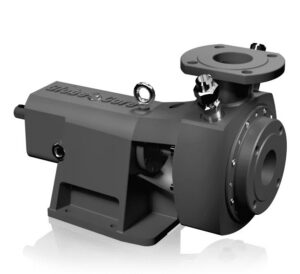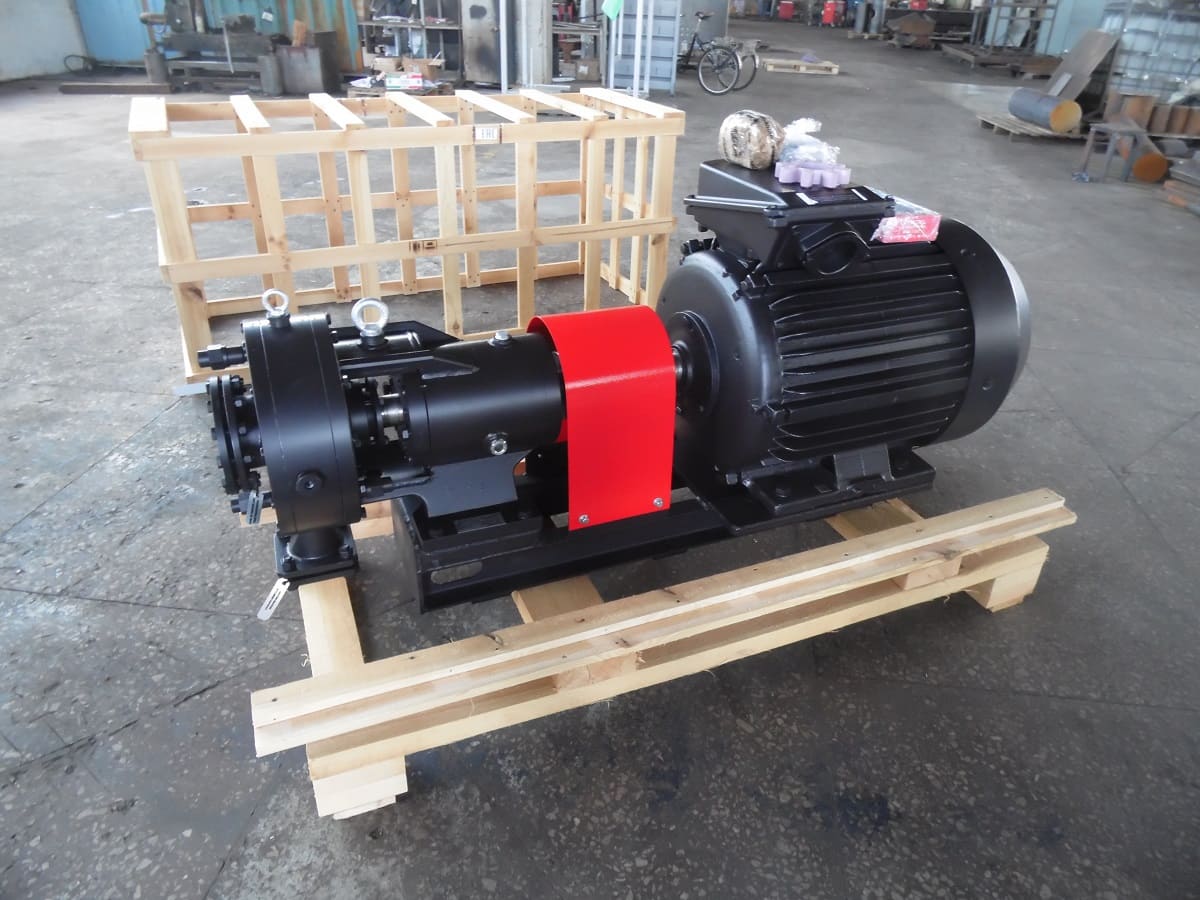
A uniform distribution homogenizer is required when a liquid, slurry, paste, suspension, or emulsion must be made more uniform by dispersing one phase through another. For feed that is already wet and flowable, a colloid mill can combine particle-size reduction, dispersion, emulsification, and homogenization in one processing stage. It is not a dry grinder, bulk powder blender, storage-tank agitator, or complete production line.
The first engineering task is therefore to define the actual operation. If the material is dry, nonflowing, or contains pieces too large to enter the mill safely, it needs separate upstream preparation. If the objective is only to blend miscible liquids or keep a tank uniform, a mixer may be the more direct choice.
What “uniform distribution” means in process terms
Uniformity can describe several different process targets. Equipment should be selected against a measurable target rather than the word “homogenizer” alone.
| Required operation | Process objective | Typical equipment role |
|---|---|---|
| Mixing | Distribute bulk ingredients throughout a vessel | A tank mixer or agitator establishes circulation and maintains bulk uniformity. |
| Particle-size reduction | Reduce suspended soft solids or granules in a liquid phase | A wet colloid mill applies intensive mechanical processing in the rotor–stator zone. |
| Dispersion | Break agglomerates and distribute particles through a liquid | A disperser, high-shear mixer, or colloid mill may be considered, depending on feed and target. |
| Emulsification | Distribute one immiscible liquid phase through another | A colloid mill can provide inline high-shear emulsification of flowable liquid materials. |
| Homogenization | Reduce local variation in a wet formulation | The mill processes the material through a controlled high-shear zone; a tank mixer may still be needed for bulk circulation. |
| Dry grinding | Reduce the size of dry solids | Use equipment designed for dry milling. A wet-processing colloid mill is not a substitute. |
When a colloid mill is the right uniform distribution homogenizer
A GlobeCore CLM colloid mill is relevant when the formulation is a pumpable liquid, emulsion, suspension, thick slurry, or paste-like product and the process requires high shear. Verified GlobeCore applications include bitumen emulsions, modified bitumen, sealants, bitumen-polymer grout, food pastes, mayonnaise, mustard, jam, pigments, paints, and other wet formulations.
The process is wet processing. The liquid or softened continuous phase must carry the other ingredients through the mill. The CLM performs localized grinding and homogenization in the processing zone. It does not automatically provide uniform ingredient concentration throughout a poorly mixed feed tank, so adequate premixing and circulation remain important.
How the rotor-stator stage works
In the documented CLM wet-grinding principle, product passes through the space between a rotating rotor and a stationary stator. The working region is wider at the inlet and narrower toward the outlet. The stator surface geometry increases turbulence, while the narrowing rotor–stator zone subjects the material to shear. This action can reduce particles or agglomerates and distribute the processed phase through the liquid.
A smaller setting or an additional pass should not be assumed to guarantee a specified result. Product response depends on the formulation and operating conditions, and excessive restriction can reduce flowability or increase process heating. Trials with the actual material are the practical way to establish a working gap, feed rate, and number of cycles.
What a colloid mill does not replace
- A dry grinder: dry powders and nonflowing solids require suitable dry-size-reduction equipment or conversion into a properly prepared wet feed.
- A tank mixer: a colloid mill treats the stream passing through it; a mixer establishes vessel-scale circulation, incorporates bulk ingredients, and can keep material suspended before and after milling.
- A dedicated powder disperser: difficult-to-wet powders may require controlled powder induction or premixing before the mill.
- A ball mill: a ball mill uses a different grinding mechanism and may be selected when prolonged media milling is required.
- A complete bitumen plant: the colloid mill is the high-shear processing stage. Separate systems are needed for storage, heating, dosing, phase preparation, pumping, controls, and finished-product handling.
- A complete food line: the mill does not wash, peel, cook, sterilize, fill, or package food. Those operations require separate equipment.
Road-construction applications
Bitumen emulsion production
For bitumen emulsion, the colloid mill is used for inline homogenization and emulsification of the prepared liquid phases. It must be integrated with the equipment that prepares and meters those phases and with the required thermal and transfer systems. See GlobeCore’s bitumen-emulsion production equipment for the distinction between the milling stage and the broader plant.
The documented CLM-2/4 is intended for inline homogenization and emulsification with a stated capacity of 2–4 m³/h. That range is a model specification, not a guarantee for every emulsion recipe. Material composition, viscosity, temperature, feed rate, and required product properties affect actual operation.
Modified bitumen
Polymer-modified bitumen requires more than simple blending. The formulation must be prepared so the polymer and bitumen can be circulated through the intended high-shear stage. GlobeCore documents the CLM-40.2 for grinding SBS polymer granules in modified-bitumen production, with a stated capacity of 30 m³/h and working-gap adjustment without mill disassembly. It can be supplied separately for line retrofit or as part of a plant.
That does not make the mill a complete modification system. Tanks, heating, dosing, circulation, residence time, and finished-product transfer must be engineered separately. The bitumen-modification equipment section provides the relevant line context.
Food and other wet-product applications
In food processing, a CLM mill may be one wet-processing stage for reducing ingredients to a paste-like consistency or producing a thick slurry under high shear. The documented CLM-100.3 has chemically resistant stainless steel wetted parts and a stated capacity of 0.1 m³/h. GlobeCore lists vegetable purées, spice processing, garlic paste, mayonnaise, mustard, jam, and caramel among CLM food applications.
These examples do not establish suitability for every recipe or sanitation program. Ingredient abrasiveness, initial piece size, allergens, cleanability, temperature sensitivity, and the required food-contact documentation must be reviewed for the project. See the food-industry colloid mill range for relevant configurations.
For formulations outside food and road construction, the colloid mills for different applications provide a starting point, but model selection still requires material testing and a defined process duty.
Feed preparation before wet milling
A colloid mill works best as part of a controlled material path. Before selection, establish how the feed will reach the processing zone and whether it will remain flowable throughout startup, steady operation, recirculation, and shutdown.
- Define the phases. Record every liquid, dissolved ingredient, suspended solid, and polymer, including addition order.
- Prepare a flowable feed. Large pieces, dry clumps, foreign objects, or poorly wetted powders need upstream size control, screening, or premixing as appropriate.
- Stabilize feed conditions. Viscosity and temperature at the mill inlet should be known rather than inferred from ambient-condition data.
- Provide controlled delivery. The upstream tank, mixer, pump, piping, and valves must supply the mill without uncontrolled interruption.
- Plan the discharge path. Decide whether the product goes to a downstream tank, another processing stage, or a recirculation loop.
Practical equipment-selection factors
| Factor | Engineering question |
|---|---|
| Material and recipe | Which phases, solids, emulsifiers, polymers, or additives are present, and in what proportions? |
| Initial feed condition | Is the feed pumpable, premixed, screened, and free of pieces that cannot enter the working zone? |
| Target result | Is acceptance based on texture, particle or droplet size, visual uniformity, stability, or another measured property? |
| Solids and viscosity | How do solids loading and viscosity change during processing and with temperature? |
| Temperature | What are the inlet condition, allowable product limit, and required heating or cooling duties elsewhere in the line? |
| Throughput | What continuous flow or batch turnaround is required under actual recipe conditions? |
| Working gap and passes | Can the target be reached in one pass, or is controlled recirculation required? |
| Cleaning | Will the line use flushing, manual cleaning, or a validated cleaning procedure, and what access is required? |
| Utilities | What electrical supply and process utilities are available at the installation point? |
| Integration | What pump, pipe connections, instrumentation, controls, interlocks, and upstream or downstream equipment are required? |
Published capacity should be treated as a reference for the documented model and duty, not as guaranteed output for a different formulation. Actual results depend on the material, recipe, initial particle size, solids content, viscosity, temperature, feed rate, working gap, and number of processing cycles.
Testing before model selection
Testing should reproduce the intended formulation as closely as possible. Record the feed preparation method, inlet temperature, initial particle condition, solids content, viscosity, flow rate, gap setting, number of passes, and observed temperature change. Evaluate the processed sample using the same acceptance method planned for production.
Laboratory equipment can support formulation work. GlobeCore documents the CLM-0.25.1 as a laboratory colloid mill for homogenizing and emulsifying liquid materials and thick slurries during bitumen-emulsion formulation work, with a minimum stated capacity of 25 L/h. Scale-up should still account for the production line’s pumping, thermal, mixing, and residence-time conditions.
Frequently asked questions
Is a uniform distribution homogenizer the same as a mixer?
No. A mixer primarily creates bulk circulation and combines ingredients in a vessel. A colloid mill applies high shear to the stream passing through its rotor–stator processing zone. Many lines need both operations.
Can a CLM colloid mill process dry powder?
The process discussed here is wet grinding and homogenization. Dry, nonflowing feed should not be assigned to a wet colloid mill merely because the equipment is called a mill. Powders may require separate dry grinding, controlled wetting, and premixing before wet processing.
Can one pass guarantee uniform distribution?
No general guarantee can be made. The required number of passes depends on the material and target. Testing should determine whether one inline pass is sufficient or whether recirculation is necessary.
Does the smallest working gap always produce the best result?
No. Gap selection must balance the required processing intensity with feed flowability, throughput, and temperature behavior. The correct setting is formulation-specific.
Is the colloid mill a complete bitumen-emulsion or modification plant?
No. It is the high-shear milling and homogenization stage. Phase preparation, heating, dosing, pumping, tanks, controls, and product handling are separate plant functions.
How should a CLM model be selected?
Match the model to a verified application, required throughput under real material conditions, wetted-part requirements, cleaning method, and line arrangement. When documented data do not confirm the result, test the customer’s actual formulation before final selection.
Define the duty before requesting a proposal
For a practical review of a uniform distribution homogenizer, provide the complete formulation, feed condition and initial particle size, required throughput, target texture or particle size, solids content, viscosity, operating and temperature limits, preferred cleaning method, available utilities, number of expected processing cycles, and all line-connection requirements. This information allows the colloid mill to be evaluated as one correctly defined stage within the full process rather than as a stand-alone answer to an undefined uniformity problem.