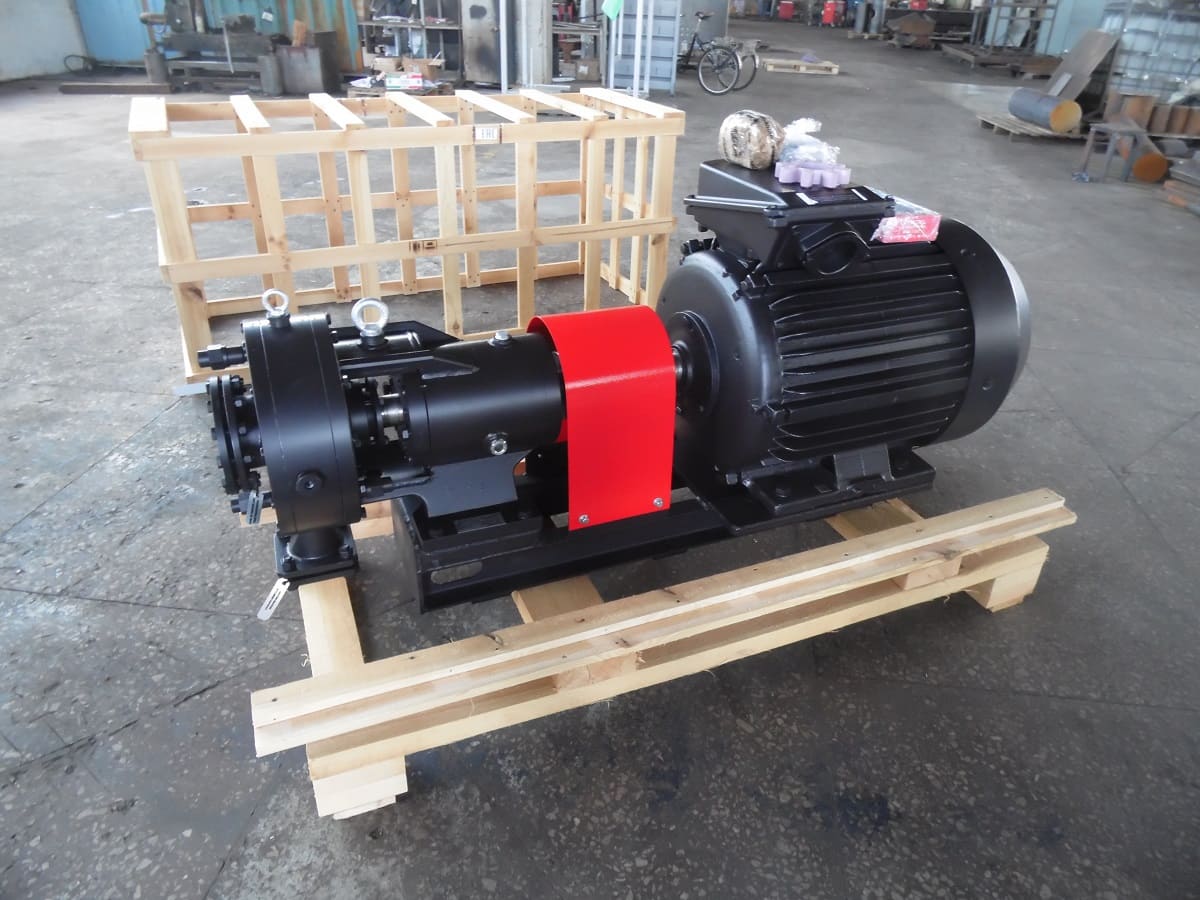
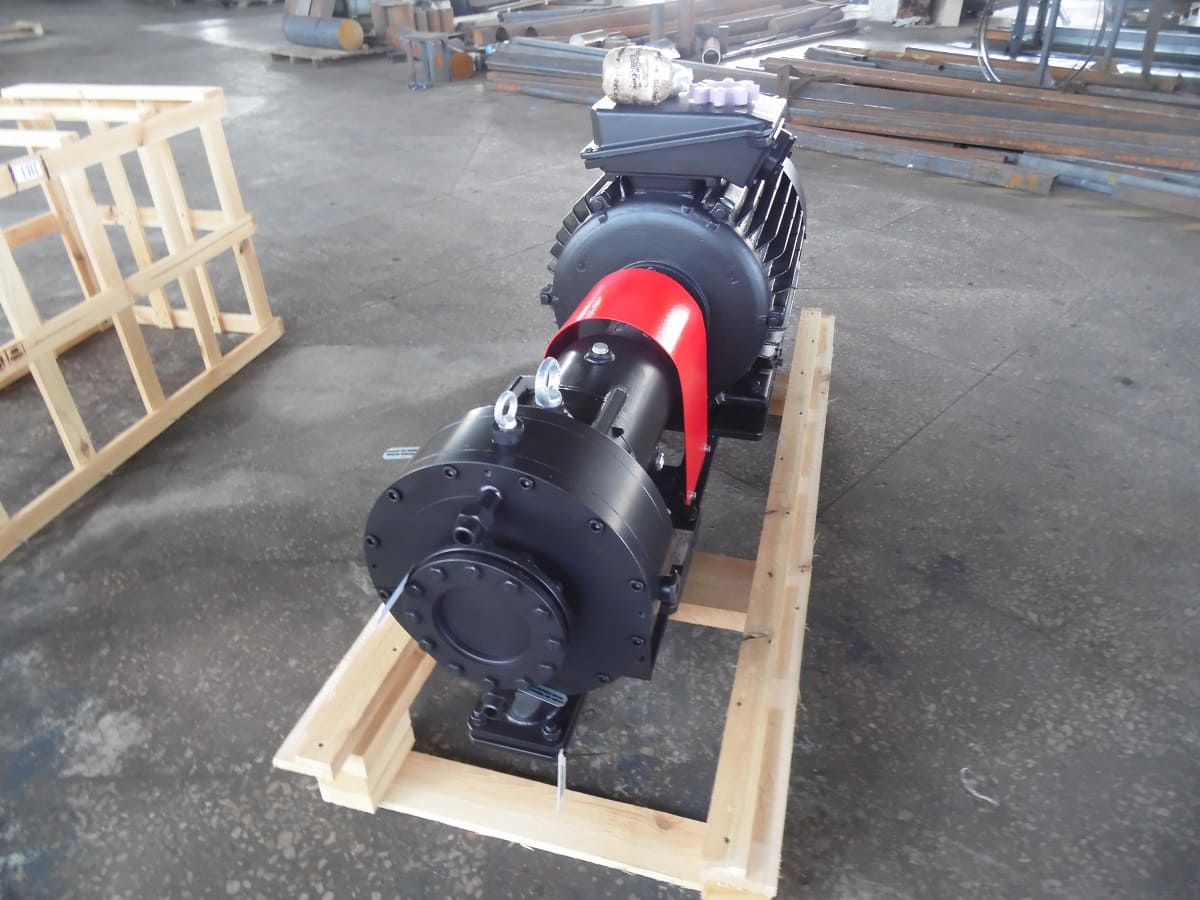
Colloid mill CLM-10/20
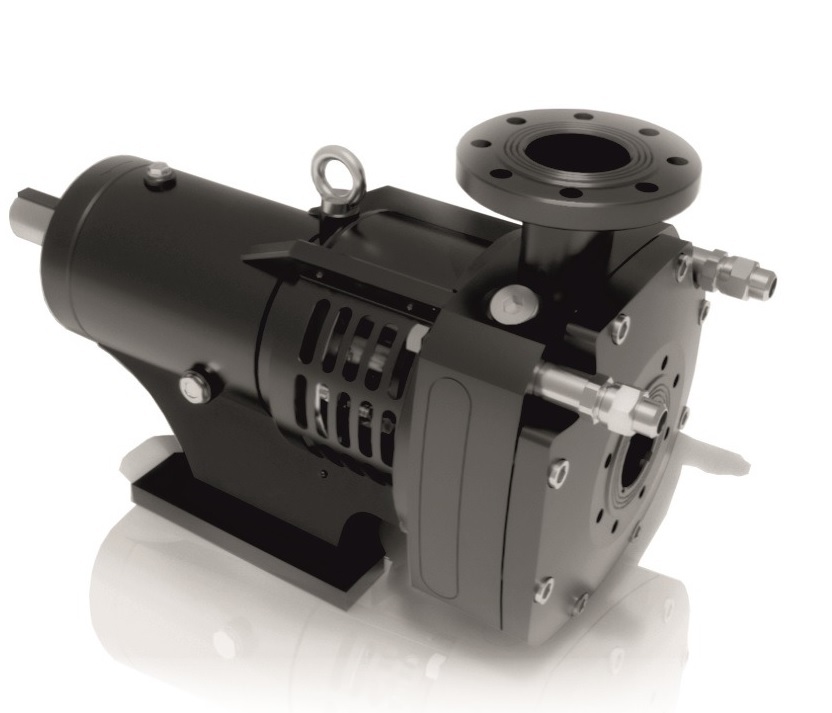
The CLM-10/20 colloid mill handles inline homogenization and emulsification of liquid products, converting them into thick, high-shear-stress slurries. It’s engineered in particular for polymer-based bitumen modification, while remaining versatile enough for a broad range of preparation, dissolution, and processing tasks across different industries.
What It’s Used For
The CLM-10/20 is designed to fit directly into continuous production processes, covering:
- Polymer-based bitumen modification – a core application for this model
- Preparation, dissolution, and processing of diverse liquid products across industrial sectors
Operating inline, the mill integrates into existing process lines, keeping production continuous rather than requiring batch-by-batch handling.
Design and Principle of Operation
The mill’s design centers on a rotor and stator, each formed from concentric rings of cutting tools (knives, cutters) shaped with grooves and holes calibrated to apply precise mechanical force to the product as it passes through.
The rotor and stator rings are positioned coaxially and turn relative to one another with no physical contact, reaching speeds of up to 52 m/s – the fastest in the entire CLM range. Precisely maintained axial and radial clearances keep this rotation contact-free, protecting the tooling even under sustained high-speed operation.
Path of the product through the mill:
- The product enters the operating chamber via the stator’s axial bore (inlet)
- It flows through the rotor/stator zone, subjected to combined mechanical and hydrodynamic forces
- The processed material exits radially through the outlet
As product moves through the rotor/stator gap, it undergoes constant shifts in shear stress, shear force, and flow velocity. The resulting increase in contact surface between reactive components accelerates chemical reactions, while the mechanical action drives thorough dispersion, emulsification, homogenization, grinding, and pulverization.
Applications
Bituminous Grouts
Bituminous grouts fall into categories based on both their field of use and their application method — cold or hot coating. Certain formulations call for surface pretreatment with a primer, a bituminous priming compound made from bitumen and solvent, known for strong penetrability and quick drying.
Grout types this mill supports include:
- Coating grout (cold application) – waterproofing surfaces, sealing joints and cracks, puttying surfaces, bonding rolled bitumen materials, protecting metal structures against corrosion
- Cold-application repair grout – functions at sub-zero temperatures, creates an ultra-durable waterproof coating on steel, concrete, and timber structures set below ground
- Bituminous-rubber grout (cold application) – waterproofs foundations, walls, tanks, and pipelines
- Adhesive grout (cold application) – bonds extruded polystyrene to bituminous and bituminous-polymer insulation materials within foundation insulation systems
Modified Bitumen (PMB)
Road Construction
- Asphalt concrete for building and repairing first-class roads, bridges, overpasses, and road junctions
- Stone matrix asphalt concrete (SMA) for surface layers on first-class highways and roads
- Porous asphalt concrete
- Crack-stopping membrane interlayers
Hydraulic Engineering
- PMB-based grouts for lining water storage facilities, swimming pools, and water supply pipes
Roofing
- PMB-based rolled roofing materials (Ruberoid, Euroruberoid)
Bitumen Shingles
- Grouts for installing and repairing roofing surfaces
Why It Delivers Results
- Top speed in the CLM lineup (up to 52 m/s) – provides the highest shear intensity available for polymer modification tasks
- Optimized for bitumen-polymer processing – purpose-built to handle the mechanical demands of polymer modification
- Contact-free rotor/stator operation – minimizes wear and extends service intervals under continuous use
- Broad application coverage – one mill handles grouts, modified bitumen, and general liquid processing needs
| No. |
Specification |
Value |
| 1 |
Capacity of the unit, m3/h (gpm) |
10…20 (44… 88)* |
| 3 |
Operating temperature, °С (°F), max |
200 (392) |
| 4 |
Maximum pressure, bar (psi) |
20 (290) |
| 5 |
Operating volume of product, L |
flow |
| 6 |
Shaft seal type |
packing (mechanical) |
| 7 |
Rotor/stator tooling type |
chamber |
| 8 |
Replaceable knife kit |
optional |
| 9 |
Knife axial gap (preset), mm (in) |
0.2…2 (8·10-3… 8·10-2) |
| 10 |
Knife radial gap, mm (in) |
0.3 (10-2) |
| 11 |
Knife tip speed, m/s (m/h), max |
52 (116) |
| 12 |
Mill shaft and bearing rotation speed, rpm |
4,500 |
| 13 |
Electric motor shaft rotation speed, rpm |
3,000 |
| 14 |
Drive power, kW |
75 (90) |
| 15 |
Power supply voltage, V |
customizable |
| 16 |
Dimensions, mm (in), max: |
|
|
1,200 (47.2) |
|
|
1,000 (39.4) |
|
|
850 (33.5) |
|
| 17 |
Weight, kg (lbs), max |
900 (1,985) |
* – depending on the product (liquid)
- the mill can be used in various industries;
- compact sizes;
- depending on the tasks to be performed, the product is supplied with various rotor/stator tooling types and shaft seals;
- the mill wetted portion and components can be made of structural-grade steel, stainless chemical resistant steel, and the steel acceptable for use in the food industry;
- the mill can be operated both indoors and in sheltered outdoor space.