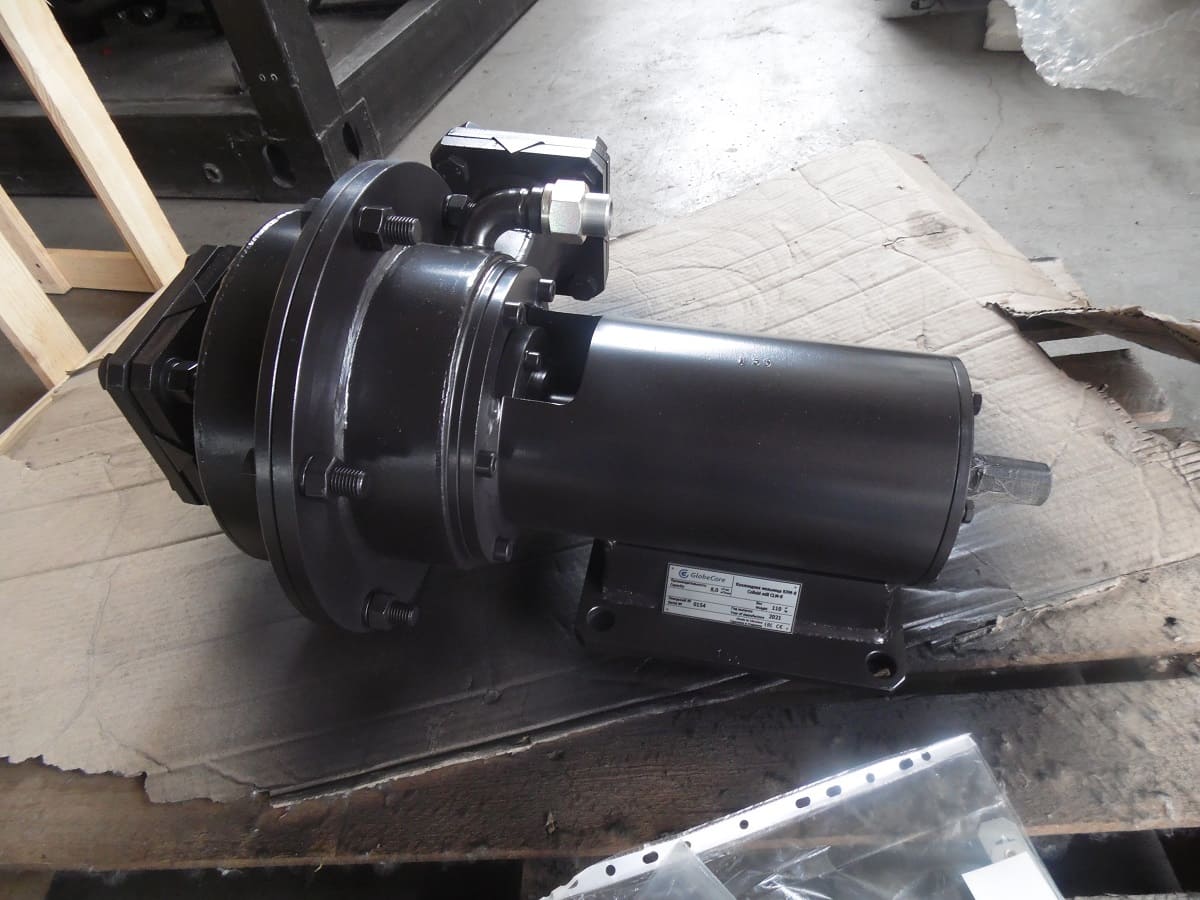
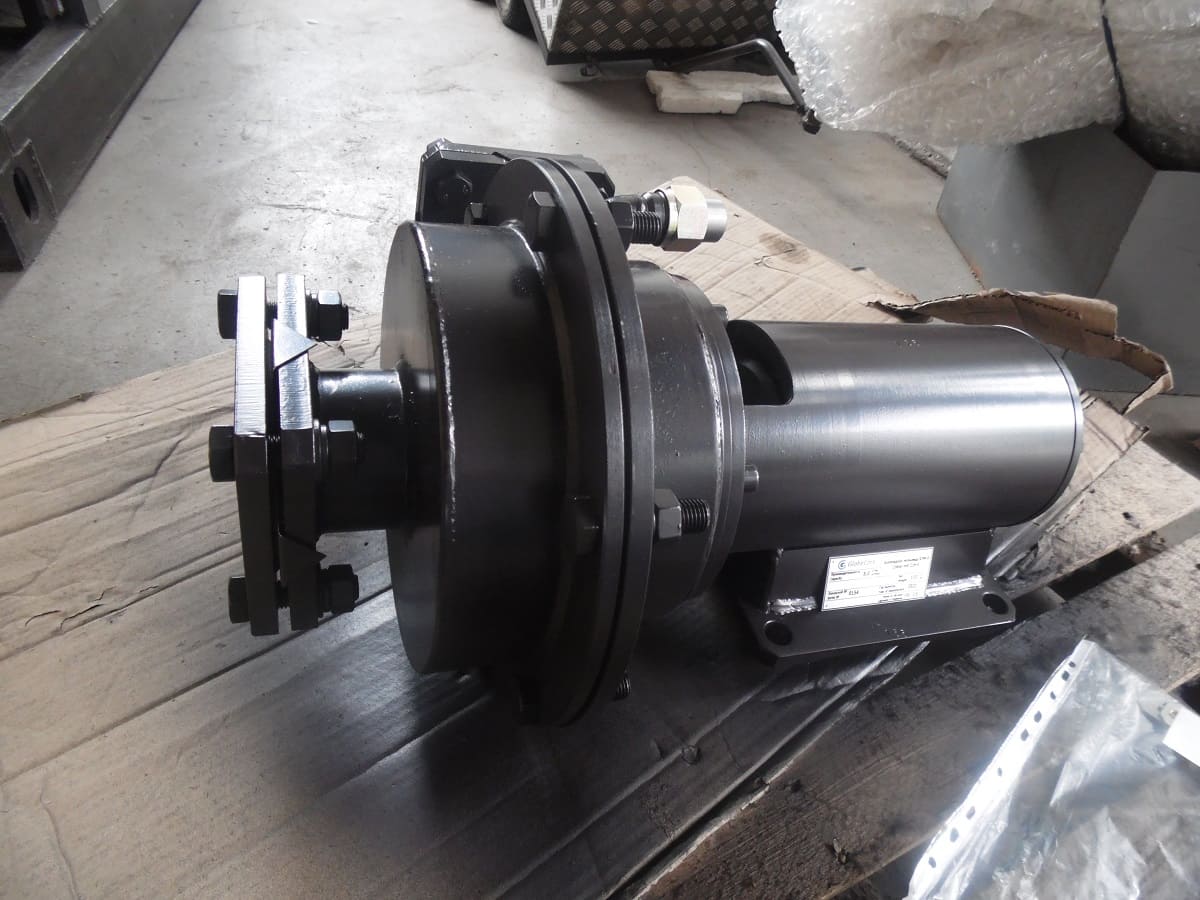
Colloid mill CLM-8/16
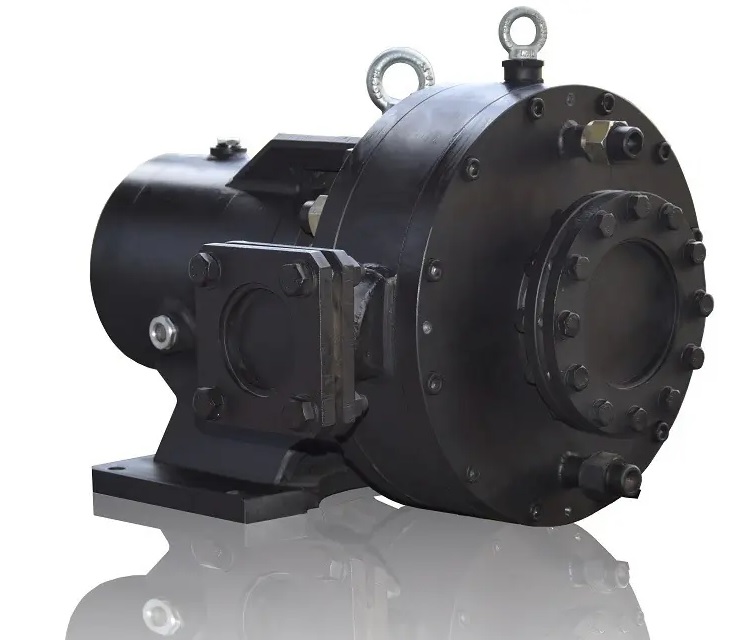
The CLM-8/16 colloid mill is built for inline homogenization and emulsification of liquid products, transforming them into dense, high-shear-stress slurries. Beyond standard preparation, dissolution, and processing tasks across various industries, it’s specifically suited for grinding granulated SBS polymer used in modified bitumen production – a demanding application that calls for consistent, high-shear mechanical action.
What It’s Used For
The CLM-8/16 supports a broad range of inline processing needs, including:
- Grinding granulated SBS polymer for modified bitumen (PMB) preparation
- General-purpose preparation, dissolution, and processing of liquid products across multiple industrial sectors
Its inline configuration allows it to operate as part of a continuous production process, feeding directly into downstream manufacturing without breaking the flow.
How It Works
The CLM-8/16 is built around a rotor/stator system: a rotor and stator, each composed of concentric tool rings fitted with cutters and knives, engineered with specific groove and hole patterns to control how mechanical force is applied to the product.
In operation, the rotor and stator rings sit coaxially and rotate relative to each other without making physical contact, reaching speeds of up to 47 m/s – the highest in the CLM line. This contact-free rotation is maintained by tightly controlled axial and radial gaps, preserving tool life over long production runs.
How product moves through the mill:
- Product enters the operating chamber through the stator’s axial bore (inlet)
- It passes through the rotor/stator system, where mechanical and hydrodynamic forces act on it
- Processed product exits through the radial outlet
As the product travels through the rotor/stator gap, it experiences continuous shifts in shear stress, shear force, and flow velocity. This expands the contact surface between reactive components, accelerating chemical reactions, while driving intensive dispersion, emulsification, homogenization, grinding, and pulverization of the material.
Applications
Bituminous Grouts
Bituminous grouts are classified both by field of application and by application method (cold or hot coating). Some formulations require surface preparation with a primer – a bituminous priming material combining bitumen and solvent, valued for high penetrability and fast drying.
Grout types produced with the CLM-8/16 include:
- Coating grout (cold application) – surface waterproofing, joint and crack treatment, surface puttying, attachment of rolled bitumen materials, anticorrosive protection of metal structures
- Cold-application repair grout – usable at sub-zero temperatures, forms an ultra-strong waterproof coating on steel, concrete, and wood structures below ground level
- Bituminous-rubber grout (cold application) – waterproofing for foundations, walls, tanks, and pipelines
- Adhesive grout (cold application) – bonds extruded polystyrene to bituminous and bituminous-polymer insulating materials in foundation insulation systems
Modified Bitumen (PMB)
Road Construction
- Asphalt concrete for new construction and repair of first-class roads, bridges, overpasses, and road junctions
- Stone matrix asphalt concrete (SMA) for pavement topping on first-class highways and roads
- Porous asphalt concrete
- Crack-stopping membrane interlayers
Hydraulic Engineering
- PMB-based grouts for coating water storage facilities, swimming pools, and water supply pipe linings
Roofing
- PMB-based rolled roofing materials (Ruberoid, Euroruberoid)
Bitumen Shingles
- Grouts for laying and repair of roofing surfaces
Why It Delivers Results
- Highest processing speed in the CLM line (up to 47 m/s) – delivers the shear intensity needed for SBS polymer grinding and PMB production
- Purpose-built for polymer modification – handles the demanding mechanical requirements of granulated SBS processing
- Contact-free rotor/stator design – extends tool life even under continuous high-speed operation
- Wide application range – supports grouts, modified bitumen, and general liquid processing from a single unit
|
Parameter |
Value |
|
Mill capacity, m3/h (gal/min) |
8… 16 (35… 70)* |
|
Kinematic viscosity of product, mm2/s (cSt), max |
150 (1.5) |
|
Initial size of polymer particles, mm (in), max |
5 (0.2) |
|
Maximum operating pressure, MPa (psi) |
0.6 (87) |
|
Rated rotation frequency, rpm |
2,950 |
|
Drive motor power, kW |
75 |
|
Power supply parameters, V/Hz |
customizable |
|
Nominal bore diameter of mill fittings, mm (in) – inlet – outlet |
120 (4.7) 80 (3.1) |
|
Operating temperature, °С (°F), max |
180 (356) |
|
Mill shaft seal |
packing |
|
Knife gap adjustment type |
manual |
|
Knife gap adjustment range, mm (in) |
0.2…2 (8·10-3… 8·10-3) |
|
Knife tip speed at 3,000 rpm, m/s (m/h), max |
47 (105) |
|
Dimensions, mm (in), max: – length – width – height |
1,690 (66.5) 650 (25.6) 770 (30.3) |
|
Net weight, kg (lbs), max |
780 (1,720) |
* – Depending on the product (liquid)
- The mill can be used in various industries.
- Depending on the tasks to be performed, the item is supplied with various rotor/stator tooling types and shaft seals.
- The wetted portion and components of the mill can be made of structural-grade steel, stainless chemical-resistant steel, and the steel acceptable for use in the food industry.
- The mill design allows for adjusting the gap between the cutters from 0.2 to 2 mm.
- The mill can be operated both indoors and in sheltered outdoor environments.